Archive | Design Tips RSS feed for this section

Interior Design Tips by BluLabel Bungalow: Small Spaces and The Luxury of Less

Today I am thrilled to have Erika Ward of Atlanta-based, Erika Ward Interiors as a guest blogger.  Erika is passionate about interior design and it shows on her lovely blog, BluLabel Bungalow. I’ve also had the pleasure of meeting Erika while in New York to watch The Nate Show. She is delightful! I also think you will love this post… tip #2 is my favorite 🙂
In the House Beautiful July/August 2010 issue, they pose the question, “Is Small the New Big?” Initially, I was irritated by the question simply because it sounded like yet another trend. In 7-10 years will we once again be in love with sprawling estates?
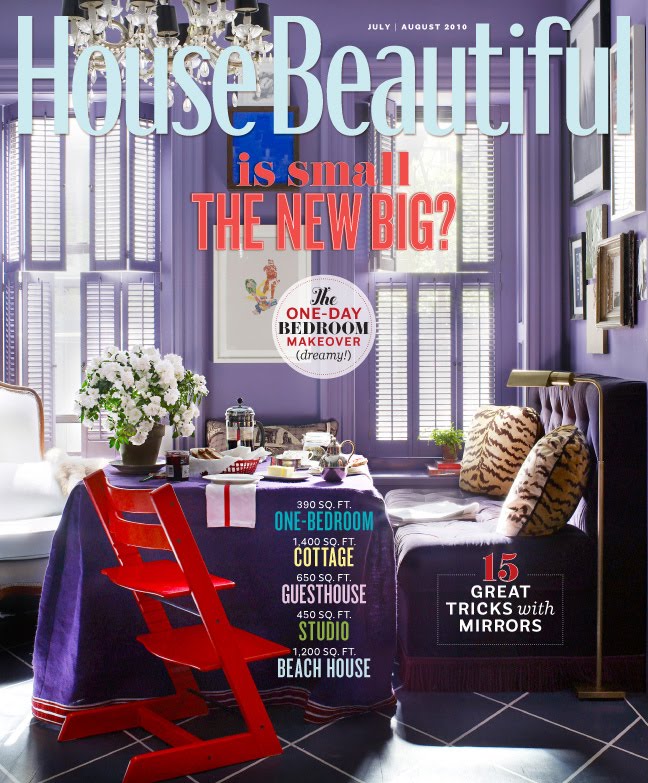
Naturally, small is the new big when so many are downsizing due to current economic conditions. While everyone is not in financial straits some have chosen to reduce their living space in order to be more ecologically responsible. The article examines three homes, the largest a mere 650 square feet, and concludes that living large is all about quality and not quantity.
When visiting potential clients, I find they have enough furniture and accessories to furnish two homes. In fact, most of us have more than we really need. My first inclination is to grab a box and begin removing excess from the walls and mantels, but I know better than that. We are sensitive about our stuff, aren’t we? Instead I offer the following suggestions, applicable to both large and small homes, when practicing “The Luxury of Less” principle:
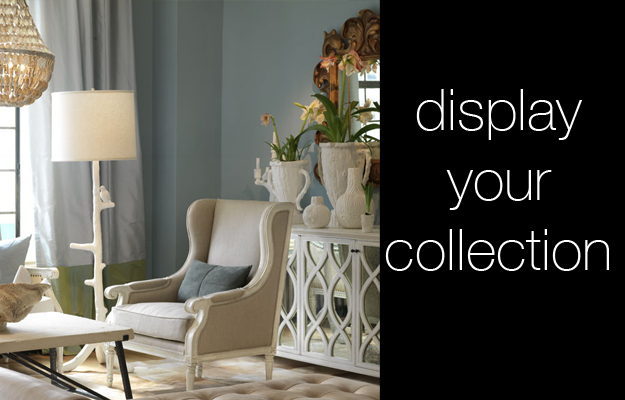
 
via oly studio
Edit Your Space
Perform a “healthy purge” and keep only what you love. If you can’t bear to part with your knick-knacks, consider a wall display or arranging them together in a curio cabinet. This works best when you have a collection of one or two items.
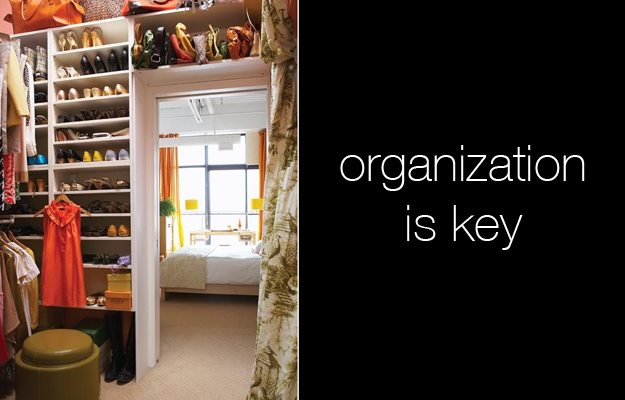
Seek Help With Organization
Living with what you need requires you to know what you need. Perform an assessment of each space noting the function of each room. If an item in the room does not serve a relevant need, then remove it. Be sure that each remaining item “has a home” or an assigned place when not in use.
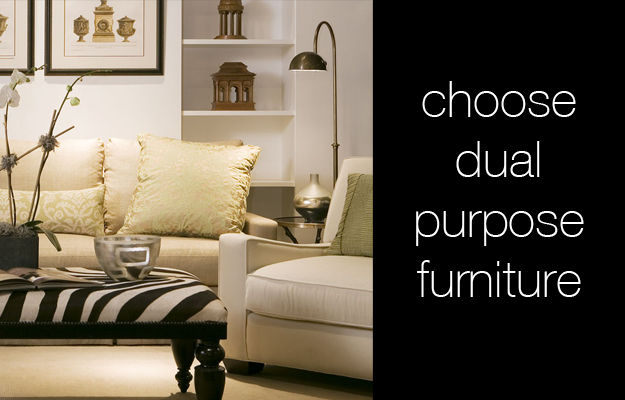
Choose Dual Purpose Furniture
Shop smarter. Choose furnishing that serve two purposes, i.e. a ottoman that serves as additional seating as well as a coffee table.
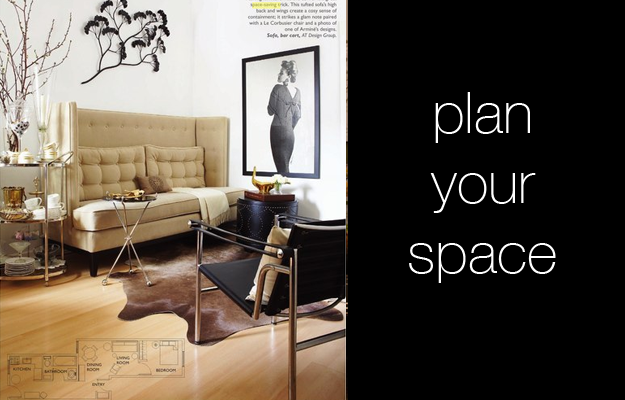
Seek Help With Space Planning
The wrong furniture arrangement can kill a space.  Employ designer tricks to find optimal seating arrangements and traffic flow in the room.  The House Beautiful article lends two pieces of advice:
  1. Keep the seating arrangments pulled away from the walls. Creating spaces beyond the furniture adds volume to the room.
  2. Use furniture with exposed legs. This creates air space and a feeling of openness you cannot achieve with upholstery that goes to the floor.
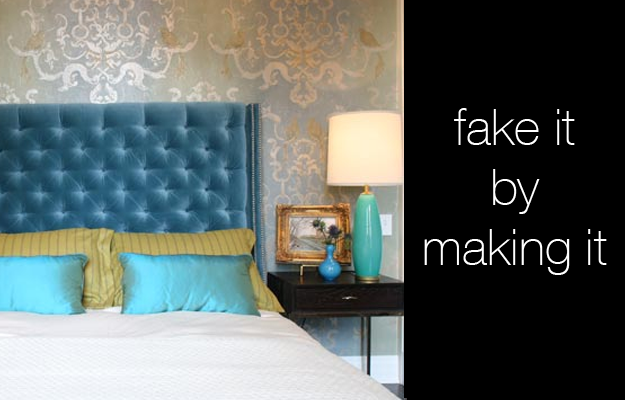
Buy the Highest Quality You Can Afford, Fake the Rest
Your budget is small, but you splurge on your dream wallpaper. You don’t have money left for a custom bed so make one. There are countless tutorials on the web that guide you through the steps of making an upholstered headboard. Give your headboard an expensive look with tufting and/or framing.
 
via BeeLine Home 

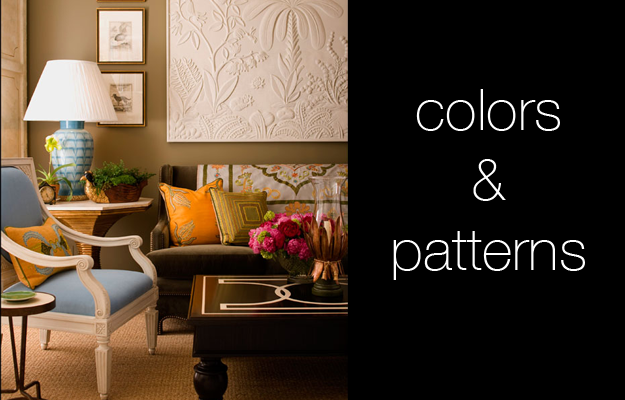
Inject Interest with Color and Patterns
Using colors and patterns provides eye candy and really draws you into a space. Painted floors, playful wallpapers, artwork, and soft fabrics help to bring the room to life and establish the personality of its owner.

Do you find satisfaction in living with less? 
How have your made your life simpler this year?
Related Posts Plugin for WordPress, Blogger...
Read full story By on October 20, 2010 in color, decorating small spaces, Design Tips, home organization, interior design

How to Design an Organized & Stylish Kids’ Playroom

A dedicated playroom may not be necessary if you live in a moderate climate year-around.  But for those that have to endure long cold winters or heat wave summers,  designing a playroom where kids can “shake their sillies out” is a good idea – not only for them, but you! Here are some tips on  how to design  an organized and stylish playroom:

Design with Your Child in Mind.
This may seem obvious, but it is really important to determine what your child likes to do before anything else. Does he enjoy legos, trucks or books? Does she love to paint, sing or play dress-up? Then select items for the space such as an easel, train table or cozy reading chair that will promote their interests. 
This fun & funky playroom {above} designed by Little Crown Interiors includes a mini black and white laminate dance floor and working disco ball for the future Broadway star. The aqua wall mirror mimics the checkered pattern in the dance floor nicely.  Whimsical custom cabinets are beautifully built to store and organize all those toys.
{image from Feldman Architecture via Houzz}
Go Vertical.
Floor to ceiling shelving helps maximize storage and helps balance a space visually. Check Ikea, Pottery Barn Kids and Room & Board for some great options. Organize the toys in stylish baskets & bins to keep clutter-free and easier to maintain. Favorite age appropriate toys should be kept within reach and on lower shelves to accommodate little ones.

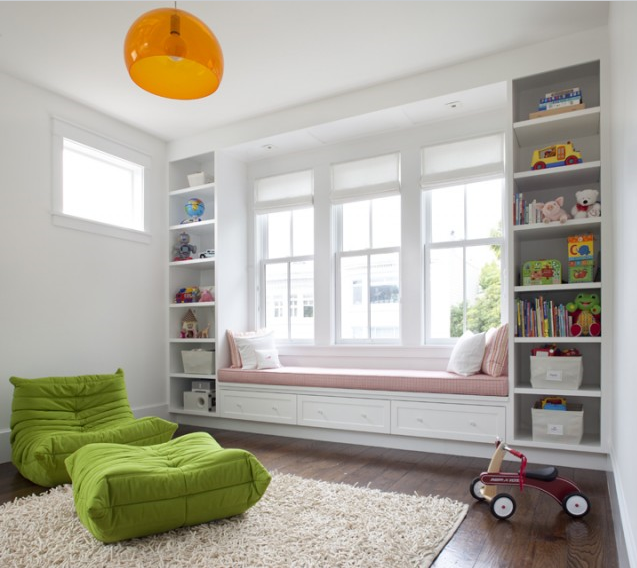
San Francisco based, Feldman Architecture designed this practical, yet stylish playroom. The floor to ceiling built-in shelves and bench not only maximize storage, but frame the windows beautifully.

{image from Ore Studios via Design*Sponge}
Look Down.
Selecting the right flooring for your playroom is also important. If you have wooden, cement or carpet flooring, layering it with an easy to clean area rug is a good idea. The playroom above designed by Ore Studios showcases colorful carpet tiles from FLOR {child table & chairs from Room & Board}. I have recommended FLOR tiles to clients before and love them because they are washable, interchangeable and are available in a vast array of colors. No nails, glue or padding necessary. Gotta love that.
{image via Dash & Albert via Posh Tots}
I am also a hug fan of Dash & Albert woven cotton rugs. They offer tons of colorful patterns including preppy stripes in just about every hue and color combination. Although not used in a playroom, we have a  3′ x 5′ Dash & Albert rug in a high traffic area and cleans up beautifully in the washing machine. 
Select Petite Furnishings.
Purchasing the right “kid” size furniture for a playroom is important. Because kids grow up so fast, and pieces may not be used more than a few years, first hit local consignment stores,  flea markets and yard sales for used kid’s furniture. Ebay and Craigslist are also favorite resources for finding inexpensive furniture. Also, don’t be afraid to purchase pieces even if a little beat up. A fresh coat of paint in a color coordinating with the room may be all that is needed.
Retail stores such as Pottery Barn Kids, Land of Nod and Rosenberry Rooms are also great resources for child’s size furnishings.
 {image via Houzz & Affordable Closet Systems}
Add Color.
A playroom by nature is supposed be fun. The colors you select will either energize or calm. Determine how you want the room to feel: Calming or cool colors are often hues blues, greens and violets {most grays included}. Energizing or warm colors are often hues of  red, orange and yellow {browns and tans included}.
In this playroom above by Affordable Closet Systems horizontal stripes are painted on a slanted wall/ceiling in a cooling blue and green hues. The wide stripe combined with the narrow striping above the custom bookcase creates visual interest and draws our eyes up.
{image from Allison Cosmos via Houzz}
Personalize the Space.
Decorating the walls with framed family photos, vacation spots or pieces of your child’s own artwork is a wonderful way to personalize the space in a playroom.  For those with a particular theme {i.e. jungle, princess, western, etc.} a custom mural or monogram wall decal are also great options.
Artist, Allison Cosmos recreated the Mad Hatter tea party from Alice in Wonderland in this closet turned playroom. So sweet.
Bottom line, designing a playroom should be fun, so enjoy the process! 
Do you have a playroom for your kids or one when you were growing up?
Related Posts Plugin for WordPress, Blogger...
Read full story By on September 27, 2010 in baby and children, Design Tips, interior design, Playroom

Tips for Styling a Bookcase Like an Interior Designer

The bookcase. It’s functional by maximizing space and aesthetically pleasing by adding height to balance out a room. The bookcase is also not just for books. It is a wonderful place to add treasures that personalize your space. Here are some tips on how to style a bookcase.
A Clean Start
Remove all items from your shelves. Store or donate unsightly paperback books.

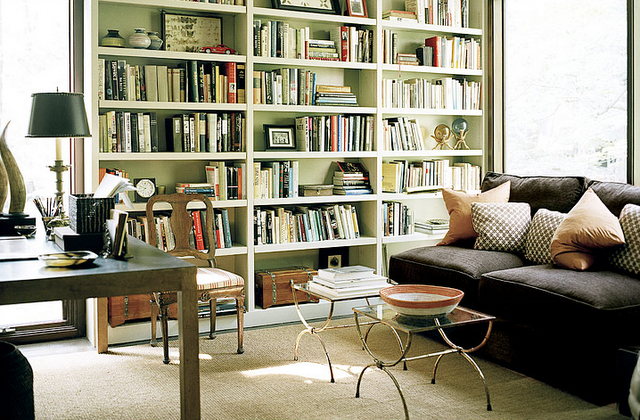
The study above,designed by Carrier and Company Interiors Ltd., is a beautiful example of how a bookcases help maximize a space, while adding height for overall balance.
Add a Splash of Color
For visual interest, back your shelves with a contrasting wallpaper print or colorful paint. This gorgeous bookcase by Samantha Pynn
{decorator, stylist and host and principal designer of Pure Design on HGTV} is backed with Schumacher’s Imperial Trellis by Kelly Wearstler  in Charcoal.

Some Up and Some Down

Books can be wonderful home accessories, so showcase the most beautiful ones in your collection. Arrange the books by size, subject and color. Create a rhythmic pattern by placing books vertically as well as horizontally {horizontal books can also act as bookends}. I love how designer, Molly Luetkmeyer of M. Design Interiors arranged the books and accessories in the built-in bookshelf above.
Make it Pretty
Adding objects such as shapely ceramics, decorative boxes, small sculptures, family photos and original artwork makes your bookcase more visually interesting and personal. When selecting objects, be aware of the scale and color. Objects shouldn’t blend in or get lost on the shelves. Here is an example of beautiful bookcases flanking a fireplace from Elle Decor  {May 2008} that showcase more decorative objects than books.  It makes me think that “Bookless” bookshelves may  show up more often as people go high tech and move to the Kindle or iPad to read books. What do you think? Do you like the look? 
Tips for Styling a Bookshelf
*images courtesy of Splendid Willow, Carrier and Company Interiors, Samantha Pynn Inc., M. Design Interiors, Good Bones, Great Pieces
Related Posts Plugin for WordPress, Blogger...
Read full story By on May 24, 2010 in bookshelves, Design Tips, home accessories, interior design

Design Tips For Styling a Living Room

Recently, Canadian House & Home published a great blog article, Styling a Room by Michael Penney. I completely agree with Penney; It’s the layers that make a room and pull it all together visually. In the before photo above, the living room has some nice design elements, but is unbalanced, uninviting and lacks a focal point.

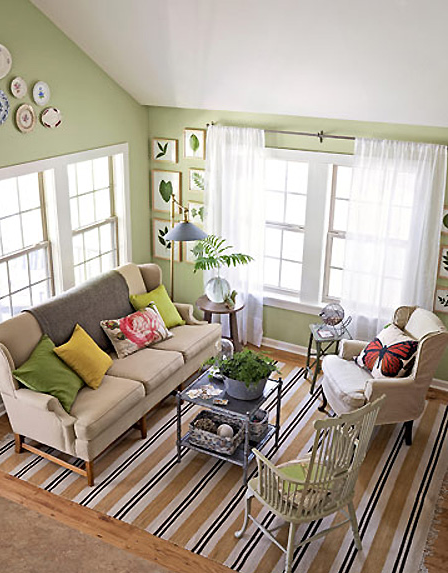
The after photo below (via Country Living), shows what a little styling can do. As Penney points out, a few design elements haven’t change including the sofa, wing chair and wall color. Here are some principles and elements of design that come to play in this redesign:

Define the Space
The most obvious addition in the room is the striped area rug. In addition to anchoring the furnishings and defining the space, it also brings needed texture to the space. When purchasing a rug, it is important to find one that is large enough so that all your furniture fits (it’s okay if the back half of a chair or sofa are not on the rug, but the front half should).

Establish a Focal Point
New drapes, parallel furniture arrangement and artwork in a vertical pattern emphasizes the room’s architectural window and creates a needed focal point in the room. However, I would have added the same drapes to the adjacent window for a more balanced look. This leads me to my next tip;

Create Balance Through Scale and Proportion
The original room also had too much visual weight or mass. In the styled room, one wing chair is replaced with a lighter Windsor chair. Mixing materials can also help balance a room. In this case a metal coffee table takes the place of a wooden one (too many wood elements in the before room). Equilibrium is also achieved by the parallel furniture grouping.

Build Color Harmony
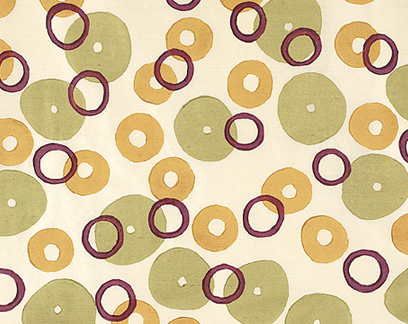
Pulling from the room’s wall color, solid yellow and green throw pillows are added to the sofa creating a more harmonious color palette. However, I would recommend at least one textile print for a pillow, window treatment or chair that pulls all of the primary colors in room’s palette together. Galbraith & Paul’s Donuts pattern in warm would be a good choice for this living room.

What elements of design helped you pull together a space?

Related Posts Plugin for WordPress, Blogger...
Read full story By on February 24, 2010 in color, Design Tips, interior design, Interiors, Living Room, living rooms, Tips/Tricks