Archive | organization tips RSS feed for this section

Spring Cleaning Tips: Making Your Closet Functional & Beautiful

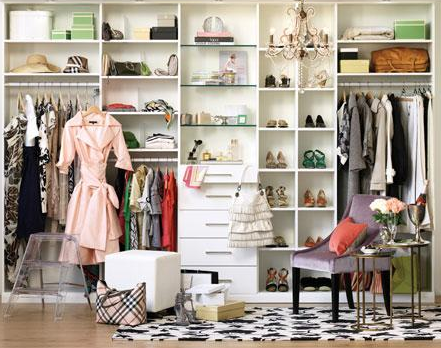
Keeping a house clean is a year around task, however many bigger cleaning projects are saved for when the seasons change. Washing windows, cleaning upholstered furnishings and washing outdoor furniture many be some chores on your spring cleaning checklist. Getting your closet organized is also an important task as we go into spring and here are a few tips to help you get started:
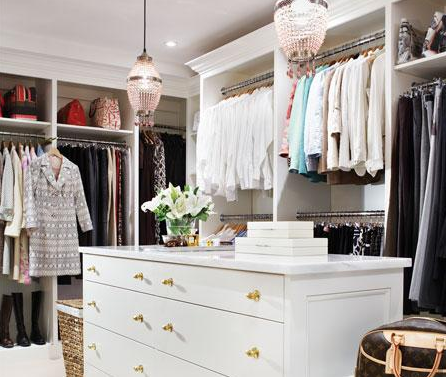
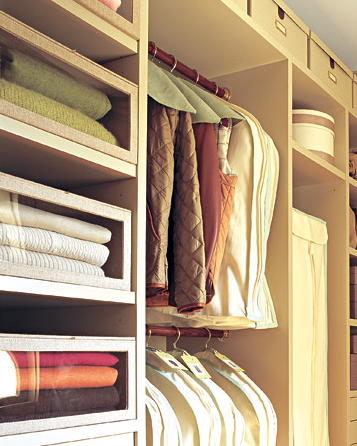
Store. As you transition your wardrobe closet from cold-weather clothing to warm-weather clothing, make sure that you store sweaters, coats and pants away in zipped bags that protect your garments from moths and other pests. And before you store, make sure your garment is cleaned. The Container Store has some great storage options and a spring organization sale going on now.
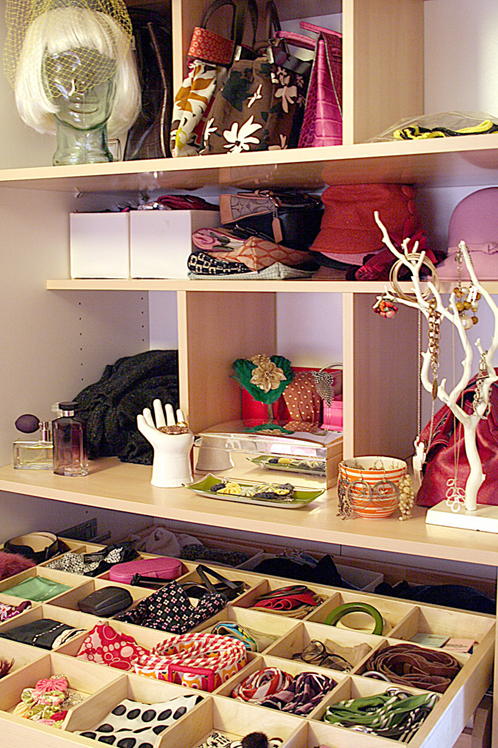
Give. Donate clothing that you do not wear to a local charity. Don’t know one in your area? Excess Access will match you with a charity organization in your zip code. They link each donation with the wish-lists of your nearby charities that can provide pick-ups or will accept drop-offs. And donors get tax-deductible receipts.
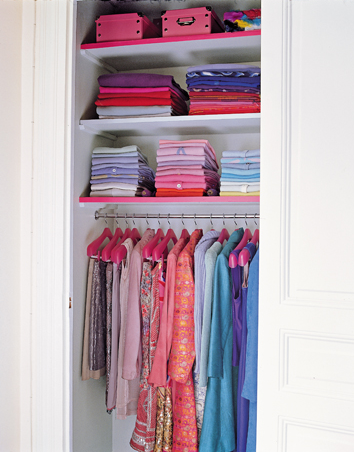
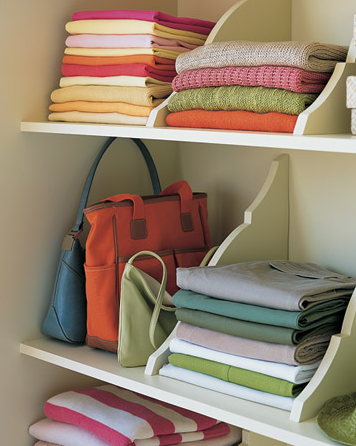
Organize. If you have a large or walk-in closet it’s best to organize it into zones by season or garment type (i.e. work, casual, formal). Next arrange the clothing into sections for each category (i.e. blouses, dresses, pants, etc.). Then arrange the clothes in each section by color from left to right (i.e. black, blue, brown, red, orange, yellow, ivory and white). This makes it much easier to find outfits and is more pleasing to the eye. Wouldn’t you agree?
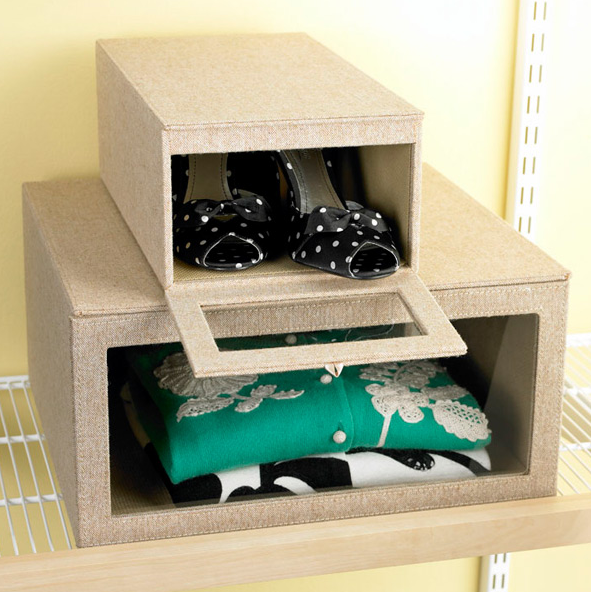
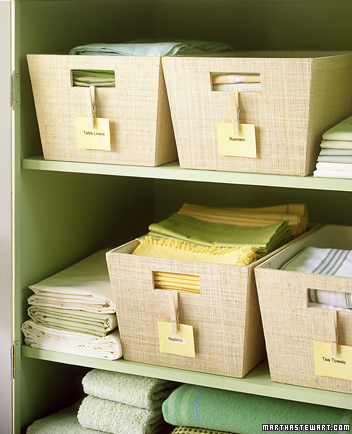
Function & Style. To help keep shirts, shoes and sweaters arranged neatly I recommend stackable boxes with clear fronts like these tweed drop-front boxes. The clear drop-front allows you see what’s inside and to access items without having to unstack them.
Plan. The Today Show recently highlighted Closet Lite, a high-tech clothing organization/planning application for your iPhone. It allows you to organize your clothing, create outfits, plan them for certain days and view them. This app can even create packing lists for any upcoming trips. Love this!

Speaking of trips – are you taking a vacation for spring break? If so, here are some more tips on packing for a trip.

Happy spring and happy organizing!

*images courtesy of House Beautiful, Martha Stewart, Canadian House & Home, Making it Lovely

Related Posts Plugin for WordPress, Blogger...
Read full story By on March 31, 2010 in Closets, home organization, household cleaning, Organization, organization tips, storage, travel tips

Organizing the Kitchen Pantry in 5 Simple Steps

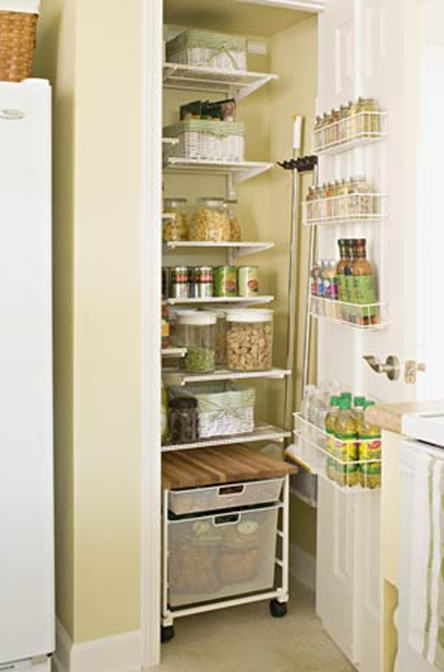
Is your pantry an eyesore? Are you buying duplicate food items because you don’t know what’s inside? Has your pantry had any unwanted visitors lately {i.e. ants}?

photo source: BHG KitchenBathIdeas

If you answered yes to any of the questions above, it is time to organize your kitchen pantry. Does this seem like a daunting task? If so, here are five steps to help you organize your pantry with beauty and function:

photo source: BHG KitchenBathIdeas

First – Clear, Discard & Sort
Remove all the items from the pantry and place into boxes based product similarity (i.e. cereals, snacks, canned soups, pasta, baking products, etc.). In the process, check expiration dates and throw away products that have expired {recycle the container / packaging if possible}.

photo source: Martha Stewart

Second – Clean
Clean the pantry shelves and floor with a damp towel.

photo source: La Dolce Vita

Third – Assess
Determine the group of items {cereals} that you use most frequently. With a post-it-note mark that box number one. Proceed to number all boxes from most frequently accessed to least. Also make notes on items that are out-of-stock and need to be replenished.

photo source

Fourth – Make it Pretty
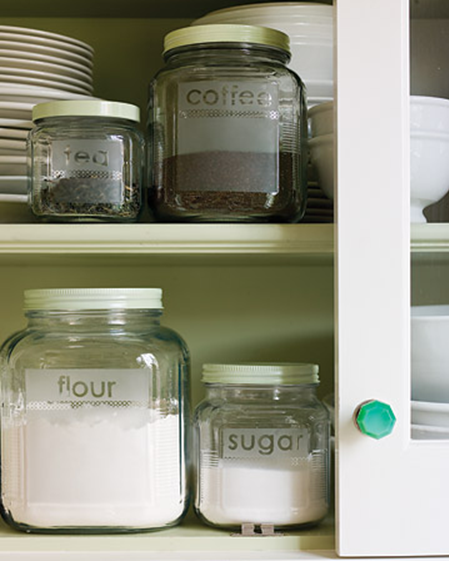
Use decorative storage containers to hold certain items {i.e. tea, rice, flour } and to help you maintain a clutter-free pantry. I particularly like baskets, tins and jars to hide unsightly items. If you opt for plastic, buy BPA (Bisphenol) free containers. BPA is a chemical in many polycarbonate plastics that may breakdown and add harmful chemicals to food. Avoid types 3 and 7 plastics because they may contain BPA.

There are so many adorable ways to label the container like the DIY glass-etched storage jars above from Martha Stewart. It’s also important to determine the type and size of container needed before beginning this project.

photo source: Country Living
Fifth – Arrange
Ideally your most used items should be placed at eye-level {except for heavy items such as large water bottles which would need to be at the floor level}. Again use post–it-notes to number / categorize which shelve each group of items will be housed. Fill the shelves on the appropriate shelf. If you are running out of space, consider storing non-essential items in the garage or basement.

Have you organized your pantry? If so, what tips do you have for keeping your pantry organized?

Related Posts Plugin for WordPress, Blogger...
Read full story By on February 10, 2010 in home organization, household cleaning, kitchens, organization tips, Organizational tips, pantry, storage, Tips/Tricks

Storage Tips and Ideas for Your Kid’s Toys

Is your child’s bedroom or playroom overrun by toys? Now that the holidays are behind us, this is the perfect time to take action and organize your child’s play items.


Toys collections seem to add up quickly and the visual clutter created may be an issue. In an article on Parenting.com, Katy Koontz explains that, “[Too many toys] can have negative effects on kids’ psyches. For toddlers and preschoolers, an overload of playthings can be overwhelming and distracting.” Simply put, by reducing the number of toys in your home you will not only prevent accidents, but may also improve your child’s health.

The first step in organizing is to get rid of any unused, broken or duplicate toys. One way is to give back and help your community by donating gently used toys to women’s shelters where toys are needed. Another way to purge toys would be to sell them either on eBay, at a yard sale or through a local consignment store. If there are toys you can’t part with and have sentimental value, one option is to ship them to a grandparent’s house to be played with on special visits.

After you have gone through the process of reducing the amount of toys in your home, evaluate how you store toys. If you have limited storage space, I strongly encourage investing in vertical storage units or shelving. Pottery Barn Kids has some great storage wall systems that would be ideal in most playrooms and could be easily scaled down for a bedroom.

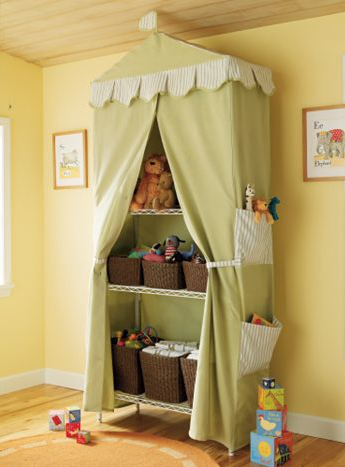
If you’d like to conceal your children’s play items, this Under the Big Top Storage Tent from Land of Nod is a darling and affordable {$119} option.

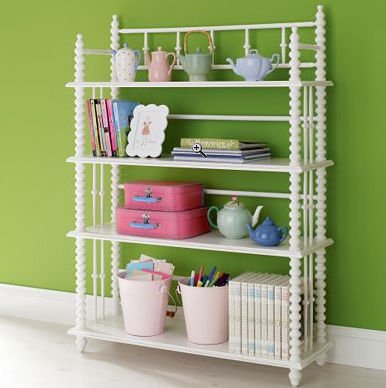
This Jenny Lind Bookcase at Land of Nod caught my eye. Love the intricate woodturnings!

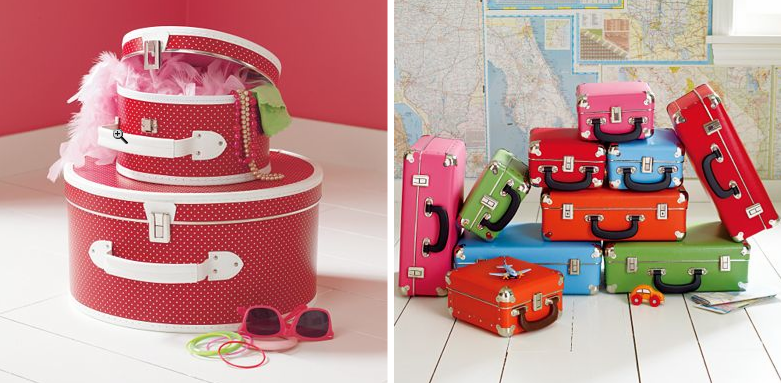
If you do decide on having a shelving unit, one nice way to store smaller toy collection such as dolls or cars is in a bin, box or basket. Land of Nod has some stylish vintage train cases and colorful suitcases perfect for housing small trinkets. If you are looking for personalized storage bins, the Macbeth Collection also has some great options.

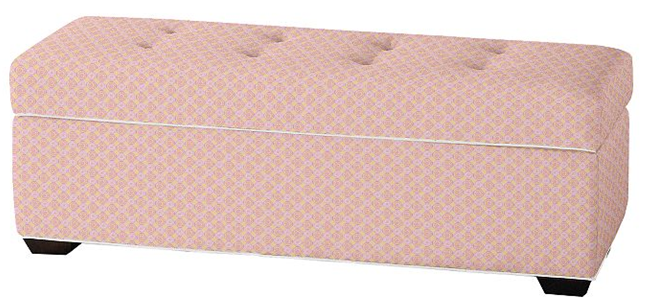
Another storage solution is a toy chest or bench. Serena & Lily’s custom upholstered bench would be perfect at the foot of the bed or under a window. This tufted bench flips open to store toys, stuffed animals or spare blankets. It’s available in any fabric from Serena & Lily’s extensive line.

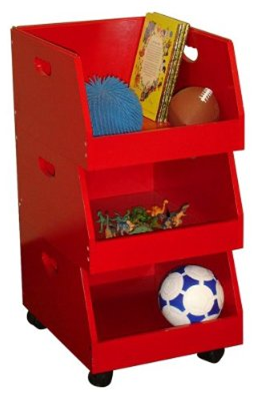
Available at Target, this three-piece stacking storage bin set is a great option for keeping toys, games or sports gear neatly organized. The bottom bin has wheels to easily move from room to room.

Storing children’s items under your child’s bed is another storage option, but can be a dusty one. Posh Tot’s storage chest for Sam Beds is a great alternative to storing items neatly and dust-free.

Once you have found a storage systems that works for you and your home, the next step is to keep organized by setting up a daily schedule to put toys away after use or before bedtime. Ask toddlers and older children to help clean-up and reward them with hugs, kisses and praise – rather than food, TV time or more toys.

Do you have a toy storage system that works in your home?

Related Posts Plugin for WordPress, Blogger...
Read full story By on January 13, 2010 in baby and children, home organization, organization tips, Playroom, storage

National Get Organized Month and Decluttering Tips

Is one of your new year’s resolutions to organize your home? January is National Get Organized Month and there is no better time to declutter your home than now.

Some organizers approximate that we use 20 of our stuff 80 of the time. If you use something a lot, find a place for it. Everything you own needs to have a home. This way you’ll be able to find it quickly when you need it and will avoid visual clutter.

Before you start to declutter and organize, identify what things are important to you and what’s just taking up space. One great exercise in decluttering is to think about what you would take with you if there was only two hours to evacuate your house.

In addition, here are a few questions I like my clients to answer when determining whether or not to keep, recycle/trash or donate an item:
• Do you like it or does it have sentimental value?
• Do you need it?
• Will you use it or have you used it in the past 12 months?
• Do you have space for it?

You will be surprised to find out how many items you are holding onto that you don’t need, use and in many case like.

So in honor of National Get Organized Month, please think about what you use, what you need and what you can live without. And happy organizing!

*images courtesy of Martha Stewart

Related Posts Plugin for WordPress, Blogger...
Read full story By on January 6, 2010 in Decluttering, home organization, organization tips