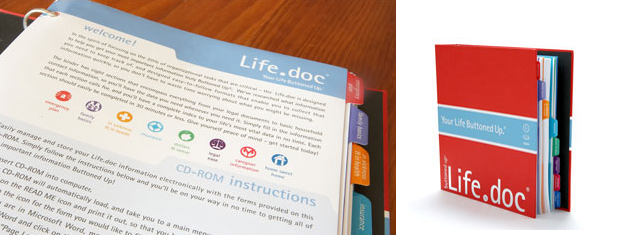
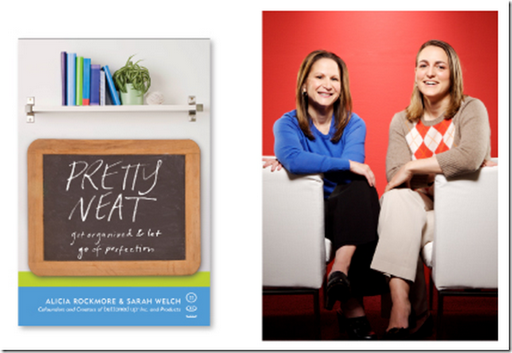
When gazing at beautiful images of meticulously organized rooms, color-coded closets and flawless family schedules, does it make you think you are not measuring up? Some suggest at least 80 of of women feel organizationally challenged. Wow. Could this be true? Buttoned Up’s co-founders, Alicia Rockmore & Sarah Welch sadly found this to be the case when interviewing hundreds of women for their new book, Pretty Neat: The Buttoned-Up Way to Get Organized and Let Go of Perfection : Simply put, many thought their “imperfect” ways left them short of the mark organizationally.
In the introduction, Alicia and Sarah state, “Chasing perfection fuels something we call organizational inertia, a type of paralysis that makes it virtually impossible to get started. All too often, the most difficult part of getting organized is knowing where to start. If perfection is the objective, paralysis makes sense. Keeping your house, work and schedule magazine-ready requires a superhuman effort to achieve and constant superhuman vigilance to maintain. The goal of getting organized isn’t necessarily to have everything picture-perfect, but rather to eliminate inefficiency so that you have more time to do what you actually want to do.”
Pretty Neat is just that. The book drives home that getting organized can be approached in a practical way and insists women need to stop holding themselves to ridiculously high standards. Once readers get past these psychological hurdles, the book provides simple solutions for taking control of their time & stuff without having to become anal. Pretty Neat’s collection of road-tested tips from real women show busy people how to:
* Take charge of to-do lists * Tame inboxes * Temper toy tsunamis and more!
I love this simple solution found on page 103 for helping reduce clutter in our closets:
Place a large cloth bag or two on the floor of your closet. Each day as you stare at your wardrobe, ask yourself three questions about one piece of clothing, a pair of shoes and an accessory: 1. Is it flattering? 2. Do I love it? 3. Does it represent who I am today? If the answer to any one of these questions is no, put the item in the cloth bay straight away. Don’t rationalize. When the bag is full, take it to Goodwill. Repeat as necessary until your closet only contains clothes, shoes and accessories that you truly love and wear.
Wanna win $250? I would love to here your best organizational tip or shortcut. Share your tip here by commenting on this post no later than December 31st at midnight! The reader who submits the best tip across all participating blogs will win $250. The winning tip will be selected by Alicia and Sarah of Buttoned Up and announced on January 10th.
Can’t wait to hear all of your get tips for getting organized!
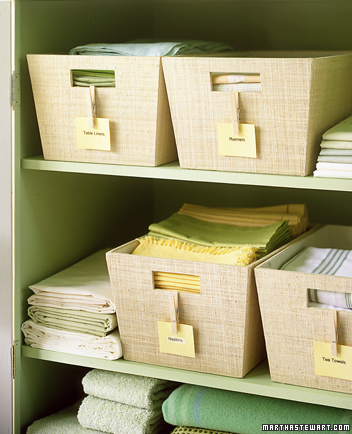
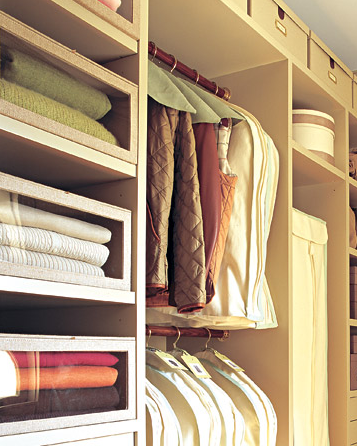
* images via Martha Stewart and Buttoned Up
** I received no monetary compensation for this post. I received one copy of Pretty Neat (book) for review. The opinions herein are my own.
Halloween 2010 was especially exciting for us – great weather, fun trick-or-treating and a huge San Francisco Giants win in the World Series!
The festive weekend has us all moving a little slower this morning. And it seems that the day after a big holiday is always filled with mixed emotions:
Sad to see it all go by so quickly.
Happy for it be over.
Bummed about cleaning up.
But, looking forward to the next holiday.
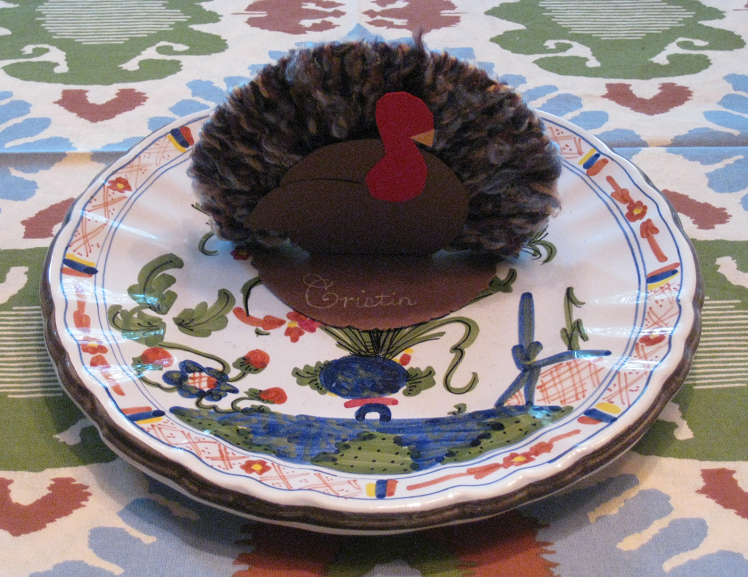
Yes, I’ve started prepping for Thanksgiving. Above is a sneak peak at the linens, China and place-cards we’ll be using this year. Haven’t even thought about Thanksgiving or need some inspiration? Here are some fun ideas on setting and decorating your table for Thanksgiving to get you in the mood.
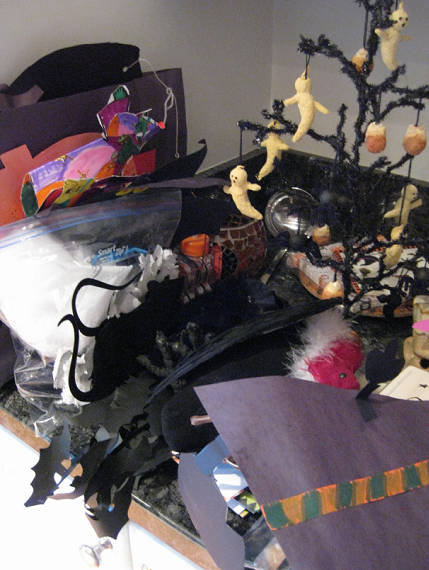
Today I’ll be cleaning-up, taking down and storing all the Halloween decorations. What’s on your list of things to do?
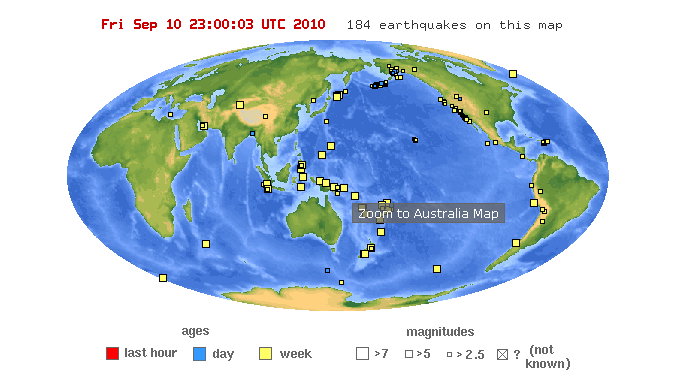
With September being National Emergency Preparedness Month, I attended a sobering presentation on Earthquake Preparedness by a professional from the USGS. We were told that there is a 62 percent probability for one or more magnitude 6.7 or greater earthquake will strike the San Francisco Bay Area region from now to 2032. (yikes!) It is also reported that only half of people have readiness items set aside in their homes for use in disasters.
But, of course it is not just the people in earthquake country that should be getting their home and family ready in case of an emergency. As we have seen from recent disasters around the world, being unprepared can be devastating. Many put off creating an emergency plan because it seems like such a time intensive and expensive project. The emergency plan checklist by Buttoned Up breaks it down into smaller tasks that can be accomplished in 20-30 minutes increments (download free here). Using the emergency plan checklist as a guide, below are helpful tips and links to preparing for a catastrophe:
One: Organize Your Emergency Plan
Your family may not be together when a disaster occurs, therefore it’s essential to plan in advance how you will communicate and get back together in different scenarios.
Establish a contact. Because it may be easier to make an out-of-town call, identify a contact {ideally out-of-state} your family can call and who can also relay information.
Make a contact list. Provide a list of contact phone numbers to all members of your family. For cell phone users, program that person(s) as “ICE” (In Case of Emergency) in your phone. If you are in an accident, emergency personnel will often check your ICE listings in order to get a hold of someone you know. Also, make sure to let your family and friends know that you’ve listed them as emergency contacts.
Subscribe to alert services. Many communities have systems that will send instant text alerts or emails to let you know about such things as bad weather, road closings and local emergencies. To sign up, visit your local Office of Emergency Management website.
Establish a meeting place. Select two meeting places in the case your family is separated in an emergency. The first location should be near your home. The second should be out-of-state or further away.Also, review possible evacuation routes available in your area online.
Learn about school and work plans. Find out what emergency plans are in place for your work and child’s school.
Share the plan. Distribute basic emergency information with your family, friends and neighbors. It should include your contact information, emergency contact, out-of-town contact and your neighborhood meeting place.
Prepare Your Home. Identify items in your home that need to be secured in the case of an earthquake. For complete information on making your home safer visit FEMA.
Two: Document Your Valuables
To be reimbursed after a catastrophe need a list of the items in your home. Recording with a video or camera the items you would want replaced is a great option. Also, documenting room to room all valuables {artwork, electronics, jewelry, rugs, furniture, clothing, etc.}. To make the task a little easier, Buttoned Up has created a binder, Valuables.doc that breaks down the big job of making an inventory into eight smaller steps.
The next step is to store the video, photos or list safely with your attorney, accountant or family member.
Three: Get Your Records Ready
One way to organize for an emergency is to create a binder. The binder holds the most critical information for your home and family, so you’re never without it when you really need it. It should be kept in a safe, yet handy place.Assuming you have a computer and printer, creating the binder is a fairly easy DIY project – here’s how step-by-step.
Manual can opener for food (if kit contains canned food)
Local maps
Cell phone with chargers, inverter or solar charger
This is a list of additional items to strongly consider adding to an Emergency Supply Kit:
Prescription medications and glasses.
Infant formula and diapers.
Pet food and extra water for your pet.
Important family documents such as copies of insurance policies, identification and bank account records in a waterproof, portable container.
Cash or traveler’s checks and change.
Important family documents such as copies of insurance policies, identification and bank account records in a waterproof, portable container. You can use the EFFAK Emergency Financial First Aid Kit – PDF, 277Kb) developed by Operation Hope, FEMA and Citizen Corps to help you organize your information.
Emergency reference material such as a first aid book or information from www.ready.gov
Sleeping bag or warm blanket for each person. Consider additional bedding if you live in a cold-weather climate.
Complete change of clothing including a long sleeved shirt, long pants and sturdy shoes. Consider additional clothing if you live in a cold-weather climate.
Household chlorine bleach and medicine dropper – When diluted nine parts water to one part bleach, bleach can be used as a disinfectant. Or in an emergency, you can use it to treat water by using 16 drops of regular household liquid bleach per gallon of water. Do not use scented, color safe or bleaches with added cleaners.
Fire Extinguisher {get training from your local fire department on how to properly use a fire extinguisher}.
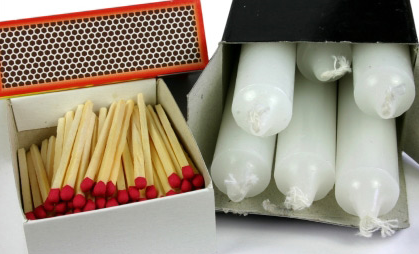
Matches in a waterproof container.
Feminine supplies and personal hygiene items.
Mess kits, paper cups, plates and plastic utensils, paper towels.
Paper and pencil.
Comfort items such as books, games, puzzles or other activities for children.
For those in earthquake country, have each member of the family keep sturdy shoes, whistle and a working flashlight next to each bed. The shoes will protect feet in the case of broken glass. Also teach everyone in your household to use the whistle or knock three times repeatedly if trapped.
Also, find out how to keep food safe during and after and emergency by visiting here.
Five: Discuss Your Plan With Your Family
Set a time to meet with all members of your immediate family and those that live with you to discuss your emergency plan together. Let all know where to find the emergency kit(s), locate important information and who has the documentation for household valuables.
Is your family ready for a catastrophe? If not don’t delay in preparing. Planning for a disaster sounds depressing, but when complete will reduce any anxiety or worry you may be feeling.
A day planner is an essential time management tool . By keeping your appointments, schedule and important dates in a daily planner, you can reduce stress by knowing that you aren’t forgetting anything. When kept up-to-date, your planner allows you to find needed information quickly and schedule appointments immediately.There are several great online versions that allow you to easily keep track of your schedule on your mobile device or computer. Personally, I still like to write down our household schedule in a good old fashion, stylishly chic day planner. Today, there are so many beautiful options available in a variety of color, prints, sizes, functionality and price. Here is my list of favorite planners for 2011:
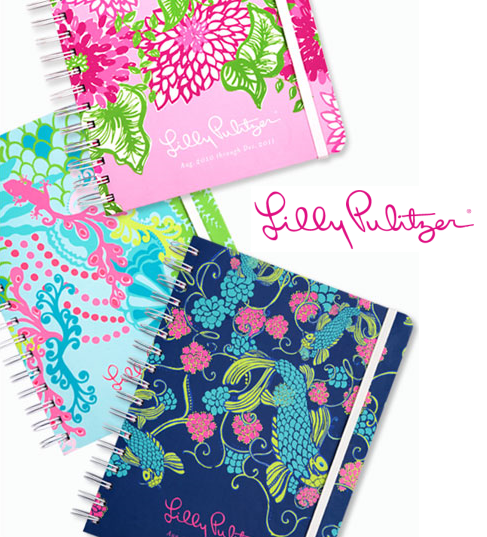
Known for her fun, vivid Palm Beach inspired prints and patterns, Lilly Pulitzer offers a chic collection of daily agendas for 2011. This useful and unique planner features a 17 month agenda {August 2010 thru 2011} and is complete with weekly & monthly calendar pages, dates to remember, contacts and notes. A large version {6 3/4″ x 8 7/8″ is $24.95 and includes stickers!
San Francisco’s Sarah Pinto offers a series of colorful, preppy Weekly Planners for 2011 to help you organize your busy schedule everyday. Not only are these 5″x7″ spiral bound planners stylish, they are eco-friendly and made in the U.S.A. with high-quality recycled paper and soy-based ink. And these organizing beauties are economical at only $25. It gets even better; Sarah Pinto is currently running a special that gives you a 2011 Weekly Planner + a Notebook + a Postcard Set for $40! Yep, 40 bucks.
This Home Office Edition planner by momAgenda also gets my vote. The spiral-bound 17-month planner is functional as it is beautiful. Families can easily track in a week-to-week format appointments, activities and important dates for mom and up to four kids. It also provides monthly with handy tabs, note pages and two folders for loose papers you don’t want to lose. And my favorite, it can be personalized!
Known for her preppy, monogrammed stationary, lucite trays and playing cards, Dabney Lee doesn’t disappoint us in the daily planner department. Her fill-in planner is perfect for anyone on the go! The planner measures 6.5″ x 8.75″ features 62 fill-in stlye pages and is non dated so you can start your planner any time of the year. By selecting your favorite style swatch and monogram type and color, each planner is unique. Love that!
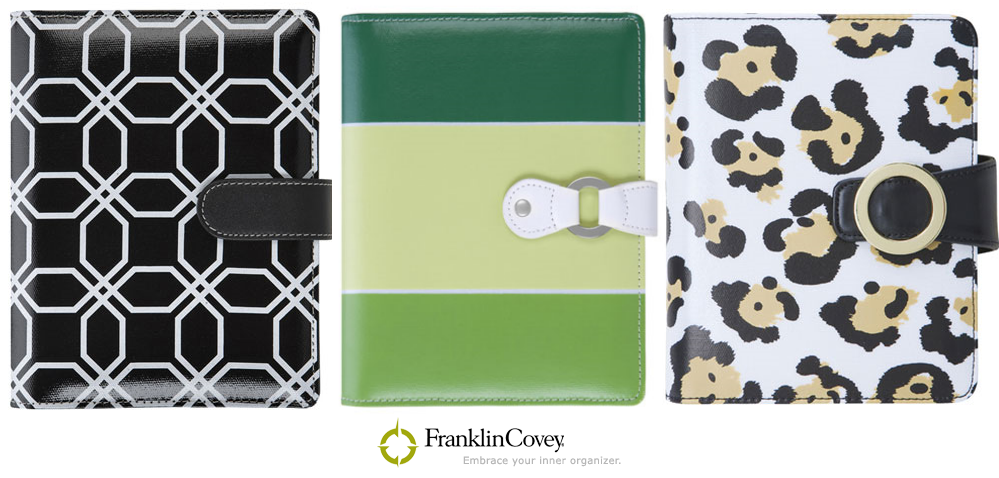
This compact, durable 365 Ring-bound Undated Planner by Franklin Covey is also on my list of best planners for 2011. Available in several stylish options this12-month, undated weekly planner lets you start planning any time of year without missing a beat Great for throwing in a purse, the planner’s lightweight binder features wipe-clean coated canvas, a pen loop, handy pockets and a snap closure. At $19.95, it’s a steal.
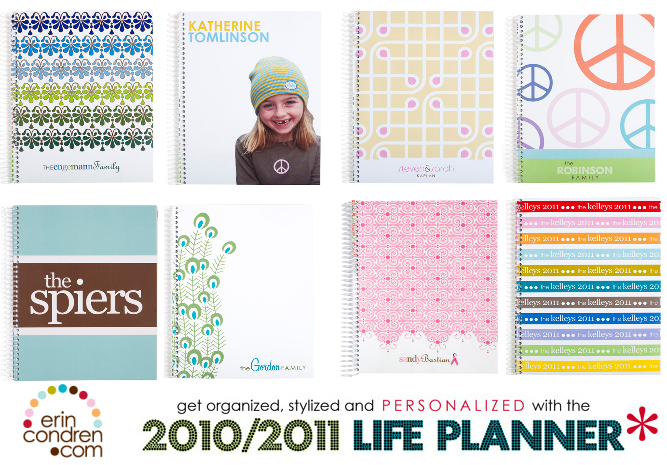
The Life Planner by Eric Condren has been my personal favorite for a few years now. It just screams fun. And every year it just gets better and better {laminated covers, zip-locked pouch and personalized gift labels} Not only is it functional {year & month at-a-glance and weekly views broken into morning, day & night}, but it offers endless design options. Erin features several design options, but she allows you to select your own colorway, add your name and a logo or picture.


 Follow